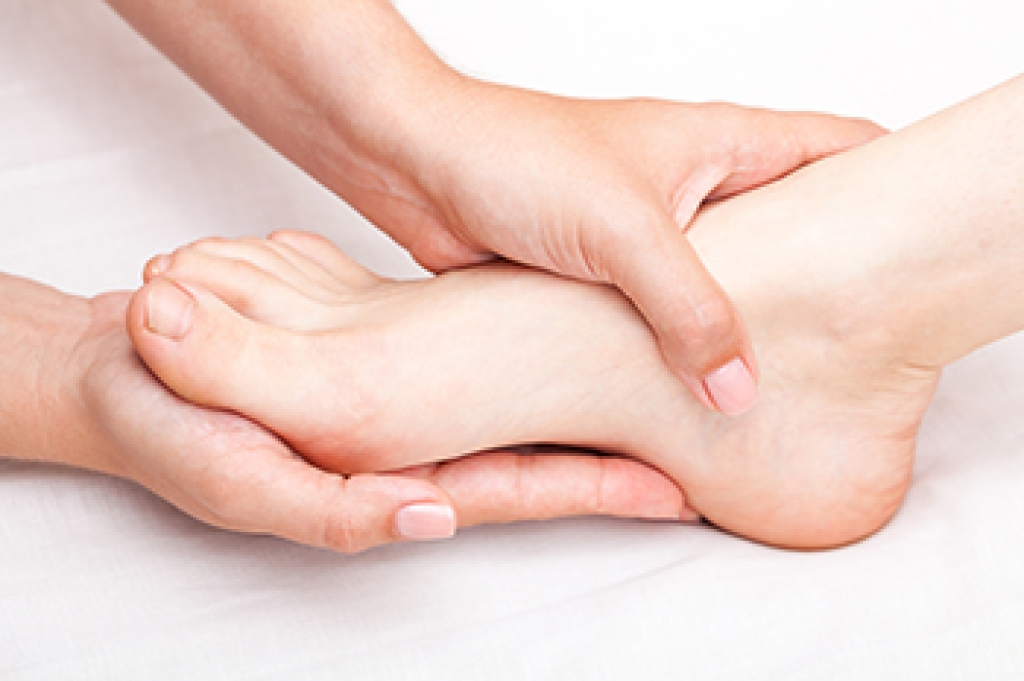
Ledderhose Disease Is a Type of Plantar Fibromatosis

Patients who have hard or flattened nodules on the bottom of their feet may have a foot condition known as plantar fibromatosis. A specific type of this ailment is referred to as Ledderhose disease and it is a rare foot condition. Patients may notice it affects both feet and typically is painless in the beginning stages. Pain and discomfort may gradually occur while walking and medical attention is often sought from a podiatrist who can treat this condition. There are several reasons why this condition may occur, including genetic history, long-term alcohol use, chronic liver disease, and diabetes. Some of the symptoms that are associated with this condition may be joint pain in other areas of the body and some people may experience a tingling or numbing sensation. If you have small bumps on the bottom of your feet, it is strongly advised that you are under the care of a podiatrist who can effectively diagnose and treat Ledderhose disease.

Some foot conditions may require additional professional care. If you have any concerns, contact Andrew Katz, DPM of Allcare Foothealth Center. Our doctor can provide the care you need to keep you pain-free and on your feet.

Rare Foot Conditions

The majority of foot conditions are common and can be treated by a podiatrist.  Standard diagnostic procedures are generally used to identify specific conditions and treatment can be rendered. A podiatrist also treats rare foot conditions which can be difficult to diagnose and may need extra attention and care. 

There are many rare foot conditions that can affect children. Some of these can include:

  • Freiberg’s disease
  • Kohler’s disease
  • Maffucci syndrome

Freiberg’s disease - This can be seen as a deterioration and flattening of a metatarsal bone that exists in the ball of the foot. It typically affects pre-teen and teenage girls, but can affect anyone at any age. Symptoms that can accompany this can be swelling, stiffness, and the patient may limp. 

Kohler’s disease - This often targets the bone in the arch of the foot and affects younger boys. It can lead to an interruption of the blood supply which ultimately can lead to bone deterioration. The patient may limp or experience tenderness, swelling, and redness.

Maffucci syndrome - This affects the long bones in a child’s foot leading to the development of abnormal bone lesions. They are benign growths and typically develop in early childhood and the bones may be susceptible to breaking. 

A podiatrist can properly diagnose and treat all types of rare foot conditions. If your child is affected by any of these symptoms or conditions, please don’t hesitate to call our office so the correct treatment method can begin.

If you have any questions, please feel free to contact our office located in Palmdale, CA . We offer the newest diagnostic and treatment technologies for all your foot care needs.
Read more about Rare Foot Conditions

When Flat Feet Are Problematic

Babies are born with flat feet, but the arch normally develops over time. However, some people never develop a normal arch, which is known as having flat feet, or pes planus. There are two types of flat feet: flexible and rigid. With flexible flat foot, there is some visible arch when you are sitting. However, when you stand up and put weight on the feet, the arch disappears and your entire foot is flush with the floor. With rigid flat foot, there is never a visible arch whether sitting or standing. Sometimes, flat feet can develop after years of standing, walking, running, and other factors that gradually weaken the posterior tibial tendon, which runs from the top of the ankle to the arch. This condition is called fallen arches. Flat feet do not always produce symptoms but sometimes can cause foot, ankle, or knee pain, stiffness, fatigue, and weakness in the feet. A podiatrist should be consulted if your flat feet are causing symptoms that are disruptive to your life. They have a variety of methods, devices, and treatments to treat your condition.

Flatfoot is a condition many people suffer from. If you have flat feet, contact Andrew Katz, DPM from Allcare Foothealth Center. Our doctor will treat your foot and ankle needs.

What Are Flat Feet?

Flatfoot is a condition in which the arch of the foot is depressed and the sole of the foot is almost completely in contact with the ground. About 20-30% of the population generally has flat feet because their arches never formed during growth.

Conditions & Problems:

Having flat feet makes it difficult to run or walk because of the stress placed on the ankles.

Alignment – The general alignment of your legs can be disrupted, because the ankles move inward which can cause major discomfort.

Knees – If you have complications with your knees, flat feet can be a contributor to arthritis in that area.  

Symptoms

  • Pain around the heel or arch area
  • Trouble standing on the tip toe
  • Swelling around the inside of the ankle
  • Flat look to one or both feet
  • Having your shoes feel uneven when worn

Treatment

If you are experiencing pain and stress on the foot you may weaken the posterior tibial tendon, which runs around the inside of the ankle. 

If you have any questions, please feel free to contact our office located in Palmdale, CA . We offer the newest diagnostic and treatment technologies for all your foot care needs.

Read more about Flat Feet

Sever's Disease Affects Children and Young Teenagers

A common condition that can affect children and young teenagers who actively participate in sporting activities is known as Sever’s disease. This is an ailment that affects the heels, and can develop as a result of a heel growth spurt. The heel pain is caused by tight calf muscles or Achilles tendon, and the pain may increase when their chosen activities are pursued. You may notice your child is limping, walking on their toes, or experiencing swelling surrounding the heel. These symptoms may be indicative of Sever’s disease. It is beneficial to wear shoes that fit correctly, and this may help the affected foot to feel better. Effective treatment starts with stopping the activity that caused the condition. It is also important to elevate the foot as often as possible. The average recovery time for Sever’s disease is approximately 2-3 months. If your child has these symptoms, it is advised that you consult with a podiatrist who can effectively diagnose and offer treatment solutions.

Sever's disease often occurs in children and teens. If your child is experiencing foot or ankle pain, see Andrew Katz, DPM from Allcare Foothealth Center. Our doctor can treat your child’s foot and ankle needs.

Sever’s Disease

Sever’s disease is also known as calcaneal apophysitis, which is a medical condition that causes heel pain I none or both feet. The disease is known to affect children between the ages of 8 and 14.

Sever’s disease occurs when part of the child’s heel known as the growth plate (calcaneal epiphysis) is attached to the Achilles tendon. This area can suffer injury when the muscles and tendons of the growing foot do not keep pace with bone growth. Therefore, the constant pain which one experiences at the back of the heel will make the child unable to put any weight on the heel. The child is then forced to walk on their toes.

Symptoms

Acute pain – Pain associated with Sever’s disease is usually felt in the heel when the child engages in physical activity such as walking, jumping and or running.

Highly active – Children who are very active are among the most susceptible in experiencing Sever’s disease, because of the stress and tension placed on their feet.

If you have any questions, please feel free to contact our office located in Palmdale, CA . We offer the newest diagnostic and treatment technologies for all your foot care needs.

Read more about Sever's Disease

Effects of Flat Feet Versus High Arches

Most people do not think too much about what type of foot they have. But it has been found that different foot types can be the source of a number of chronic foot maladies. Foot types range from flat feet to high arches, and anywhere in between. With flat feet, the sole of the foot is flush with the floor when bearing weight. With high arches, the midfoot is stiff and only the toe, heel and outside of the foot touch the ground when standing. People with flat feet often develop inflammation of the tendon on the inside of the ankle, termed posterior tibial tendonitis. People with high arches tend to develop inflammation of the tendon on the outside of the ankle, termed peroneal tendonitis. These conditions occur because of the way the foot absorbs the force produced with every step you take. Other conditions common to those with flat feet include tarsal tunnel syndrome and stress fractures of the 2nd metatarsal. Those with high arches may be more susceptible to ankle instability and sprains, stress fractures of the 5th metatarsal, and sesamoiditis. Both foot types may result in plantar fasciitis. To find out more about your foot type, especially if you are in pain, please consult a podiatrist for an examination and suggestions for treatment.

If you have any concerns about your feet, contact Andrew Katz, DPM from Allcare Foothealth Center. Our doctor can provide the care you need to keep you pain-free and on your feet.

Biomechanics in Podiatry

Podiatric biomechanics is a particular sector of specialty podiatry with licensed practitioners who are trained to diagnose and treat conditions affecting the foot, ankle and lower leg. Biomechanics deals with the forces that act against the body, causing an interference with the biological structures. It focuses on the movement of the ankle, the foot and the forces that interact with them.

A History of Biomechanics

  • Biomechanics dates back to the BC era in Egypt where evidence of professional foot care has been recorded.
  • In 1974, biomechanics gained a higher profile from the studies of Merton Root, who claimed that by changing or controlling the forces between the ankle and the foot, corrections or conditions could be implemented to gain strength and coordination in the area.

Modern technological improvements are based on past theories and therapeutic processes that provide a better understanding of podiatric concepts for biomechanics. Computers can provide accurate information about the forces and patterns of the feet and lower legs.

Understanding biomechanics of the feet can help improve and eliminate pain, stopping further stress to the foot.

If you have any questions please feel free to contact our office located in Palmdale, CA . We offer the newest diagnostic and treatment technologies for all your foot and ankle needs.

Read more about The Importance of Biomechanics in Podiatry

Are You Suffering From Nerve Damage?

Neuropathy is a condition that can lead to numbness or loss of sensation in the feet, but it can also cause pain. This condition is more likely to develop for those who are diabetic, obese, or with high blood pressure.

Connect With Us