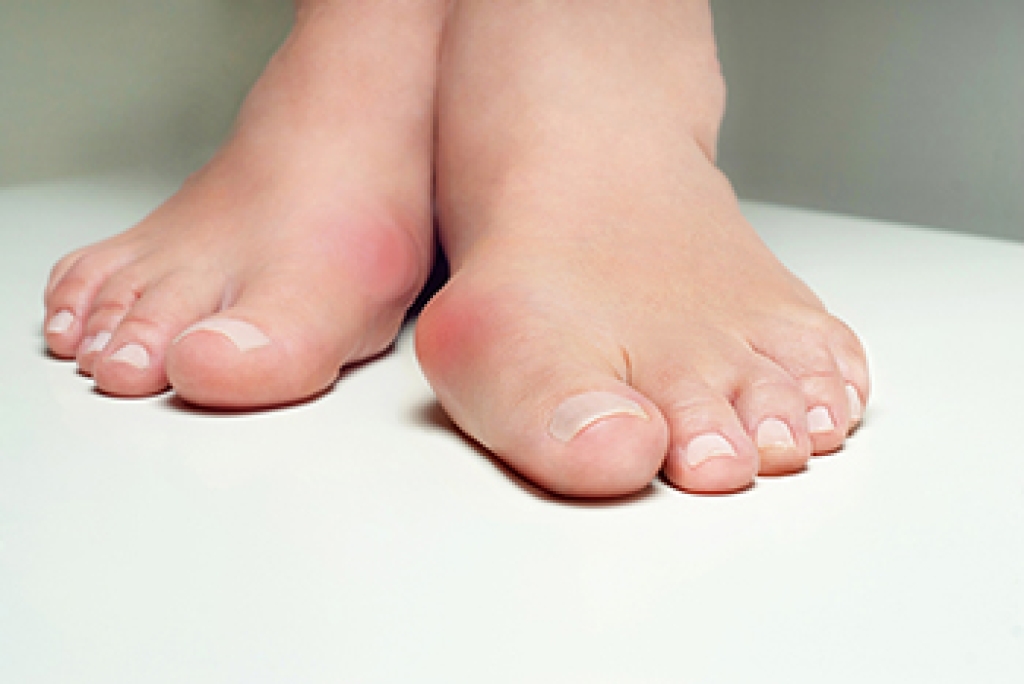
Bunions and Bunionettes

Bunions are an acquired foot deformity where a misalignment in the bones of the big toe causes a protrusion to form on the outside of the foot at the toe’s joint. This forces the toe to angle toward the other toes rather than pointing straight ahead. Bunionettes, also known as tailor bunions, form on the outside of the pinky toe. Both bunions and bunionettes can cause pain, swelling, and soreness. Bunions that go untreated may lead to limited range of movement and will not get better on their own. Wearing proper footwear with lower heels, a rounded toe box and plenty of room for the toes can help you avoid getting a bunion or bunionette, although the shape of your feet, heredity, and certain medical conditions can also be contributing factors. If you have a bunion or bunionette, it's a good idea to seek the professional care of a podiatrist for treatment options.

If you are suffering from bunions, contact Andrew Katz, DPM of Allcare Foothealth Center. Our doctor can provide the care you need to keep you pain-free and on your feet.

What Is a Bunion?

A bunion is formed of swollen tissue or an enlargement of boney growth, usually located at the base joint of the toe that connects to the foot. The swelling occurs due to the bones in the big toe shifting inward, which impacts the other toes of the foot. This causes the area around the base of the big toe to become inflamed and painful.

Why Do Bunions Form?

Genetics – Susceptibility to bunions are often hereditary

Stress on the feet – Poorly fitted and uncomfortable footwear that places stress on feet, such as heels, can worsen existing bunions

How Are Bunions Diagnosed?

Doctors often perform two tests – blood tests and x-rays – when trying to diagnose bunions, especially in the early stages of development. Blood tests help determine if the foot pain is being caused by something else, such as arthritis, while x-rays provide a clear picture of your bone structure to your doctor.

How Are Bunions Treated?

  • Refrain from wearing heels or similar shoes that cause discomfort
  • Select wider shoes that can provide more comfort and reduce pain
  • Anti-inflammatory and pain management drugs
  • Orthotics or foot inserts
  • Surgery

If you have any questions, please feel free to contact our office located in Palmdale, CA . We offer the newest diagnostic and treatment technologies for all your foot care needs.

Read more about What Are Bunions?

What Can Be Done if My Baby Has Clubfoot?

Some babies are born with a foot deformity called congenital talipes equinovarus, better known as clubfoot. Instead of the foot being straight, it twists inward because the tissues that connect the foot to the leg are shortened. Generally, the heel points downward and the toes point inward; the affected leg is shorter; the Achilles tendon is tight; and the affected foot is shorter and wider than the other foot. This condition is not usually painful, but it can result in other problems as your baby grows older and begins to walk. Causes of clubfoot can include family history, use of tobacco and/or alcohol during pregnancy, and congenital conditions related to spinal cord development. The most common way to treat clubfoot in babies is to stretch the foot and place it in a cast over a period of months. However, in more severe cases, various surgeries may be required. If your baby is born with clubfoot, it is a good idea to seek the advice of a podiatrist who can help to develop a regular treatment program as soon as possible.

Making sure that your children maintain good foot health is very important as they grow. If you have any questions, contact Andrew Katz, DPM of Allcare Foothealth Center. Our doctor can provide the care you need to keep you pain-free and on your feet.

Keeping Children's Feet Healthy

Having healthy feet during childhood can help prevent medical problems later in life, namely in the back and legs. As children grow, their feet require different types of care. Here are some things to consider...

Although babies do not walk yet, it is still very important to take care of their feet.

Avoid putting tight shoes or socks on his or her feet.

Allow the baby to stretch and kick his or her feet to feel comfortable.

As a toddler, kids are now on the move and begin to develop differently. At this age, toddlers are getting a feel for walking, so don’t be alarmed if your toddler is unsteady or ‘walks funny’. 

As your child gets older, it is important to teach them how to take care of their feet.

Show them proper hygiene to prevent infections such as fungus.

Be watchful for any pain or injury.

Have all injuries checked by a doctor as soon as possible.

Comfortable, protective shoes should always be worn, especially at play.

If you have any questions, please feel free to contact our office located in Palmdale, CA . We offer the newest diagnostic and treatment technologies for all your foot care needs.

Read more about What to Do to Keep Your Child’s Feet Healthy

Baseball’s Potential Toll on the Feet

There are a variety of injuries that can impact the feet and ankles that come from playing baseball. One of the most common injuries that occurs in baseball, due to running, sliding, and stepping on bases, is an ankle sprain. Athletes who overtrain can also develop heel injuries, such as plantar fasciitis or Achilles tendinopathy. There are also a number of injuries that can be caused by cleats. If the cleats don’t fit properly, they could cause issues such as bunions, hammertoes and neuromas. Ingrown toenails are also common among baseball players, since toenails that are cut too short or at an angle can dig into the skin and get infected. Baseball players who are dealing with any sort of pain or aggravation in their feet or ankles would be wise to consult with a podiatrist for a proper diagnosis and treatment plan.  

Sports related foot and ankle injuries require proper treatment before players can go back to their regular routines. For more information, contact Andrew Katz, DPM of Allcare Foothealth Center. Our doctor can provide the care you need to keep you pain-free and on your feet.

Sports Related Foot and Ankle Injuries

Foot and ankle injuries are a common occurrence when it comes to athletes of any sport. While many athletes dismiss the initial aches and pains, the truth is that ignoring potential foot and ankle injuries can lead to serious problems. As athletes continue to place pressure and strain the area further, a mild injury can turn into something as serious as a rupture and may lead to a permanent disability. There are many factors that contribute to sports related foot and ankle injuries, which include failure to warm up properly, not providing support or wearing bad footwear. Common injuries and conditions athletes face, including:

  • Plantar Fasciitis
  • Achilles Tendinitis
  • Achilles Tendon Rupture
  • Ankle Sprains

Sports related injuries are commonly treated using the RICE method. This includes rest, applying ice to the injured area, compression and elevating the ankle. More serious sprains and injuries may require surgery, which could include arthroscopic and reconstructive surgery. Rehabilitation and therapy may also be required in order to get any recovering athlete to become fully functional again. Any unusual aches and pains an athlete sustains must be evaluated by a licensed, reputable medical professional.

If you have any questions please contact our office located in Palmdale, CA . We offer the newest diagnostic and treatment technologies for all your foot and ankle needs.

Read more about Sports Related Foot And Ankle Injuries

Let the Expert Treat Your Ingrown Toenails

Ingrown toenails can be painful and can make wearing shoes or walking uncomfortable. Seek professional help if you believe you've developed an ingrown toenail and be treated safely. 

Everything You Wanted to Know About Ingrown Toenails

An ingrown toenail occurs when the nail grows into the surrounding skin on the sides of the nail. This condition can affect people of all ages (even babies). Ingrown toenails can be quite painful and may even become inflamed and infected. Rounding your toenails off when trimming them (rather than cutting them straight across) or cutting them too short can lead to an ingrown toenail. Wearing high heels and improperly fitted shoes that force the toes to squish together can also lead to ingrown toenails. Other possible contributing factors to ingrown toenails include injuries to the toenail, fungal toenail infections, nail deformity, and certain medications which can sometimes cause nail dystrophy. If you develop an ingrown toenail, make an appointment with a podiatrist who can treat your ingrown toenail with a variety of methods, while avoiding possible infection and preventing it from becoming ingrown again.

Ingrown toenails can become painful if they are not treated properly. For more information about ingrown toenails, contact Andrew Katz, DPM of Allcare Foothealth Center. Our doctor can provide the care you need to keep you pain-free and on your feet.

Ingrown Toenails

Ingrown toenails occur when a toenail grows sideways into the bed of the nail, causing pain, swelling, and possibly infection.

Causes

  • Bacterial infections
  • Improper nail cutting such as cutting it too short or not straight across
  • Trauma to the toe, such as stubbing, which causes the nail to grow back irregularly
  • Ill-fitting shoes that bunch the toes too close together
  • Genetic predisposition

Prevention

Because ingrown toenails are not something found outside of shoe-wearing cultures, going barefoot as often as possible will decrease the likeliness of developing ingrown toenails. Wearing proper fitting shoes and using proper cutting techniques will also help decrease your risk of developing ingrown toenails.

Treatment

Ingrown toenails are a very treatable foot condition. In minor cases, soaking the affected area in salt or antibacterial soaps will not only help with the ingrown nail itself, but also help prevent any infections from occurring. In more severe cases, surgery is an option. In either case, speaking to your podiatrist about this condition will help you get a better understanding of specific treatment options that are right for you.

If you have any questions, please feel free to contact our office located in Palmdale, CA . We offer the newest diagnostic and treatment technologies for all your foot care needs.

Read more about Ingrown Toenail Care

Connect With Us